Designing an AI phone agent for the calls a tour operator misses
Go Adventure Hawaii had plenty of demand and a real problem: callers with high intent to book kept reaching voicemail while the crew was on the water. I designed an AI voice assistant, with a step-by-step setup guide, to answer every call day or night.
The problem
The demand was there. The calls were not being answered.
Go Adventure Hawaii already gets strong interest from Google, Instagram, Yelp and TripAdvisor. Traffic was not the issue. Conversion was.
A large share of the people calling had high intent to book. Many of those calls were missed or answered late, because staff were out on tours, preparing for early-morning departures, or buried in seasonal demand. Guests also call after hours and from other time zones. The plan named the biggest cause of lost bookings plainly: a missed call and no immediate response.
The framing that mattered: missed calls looked like a staffing problem, but hiring someone to sit by the phone from dawn to midnight is expensive for a small crew. Availability is something software can solve.
The solution
A phone agent that knows the business
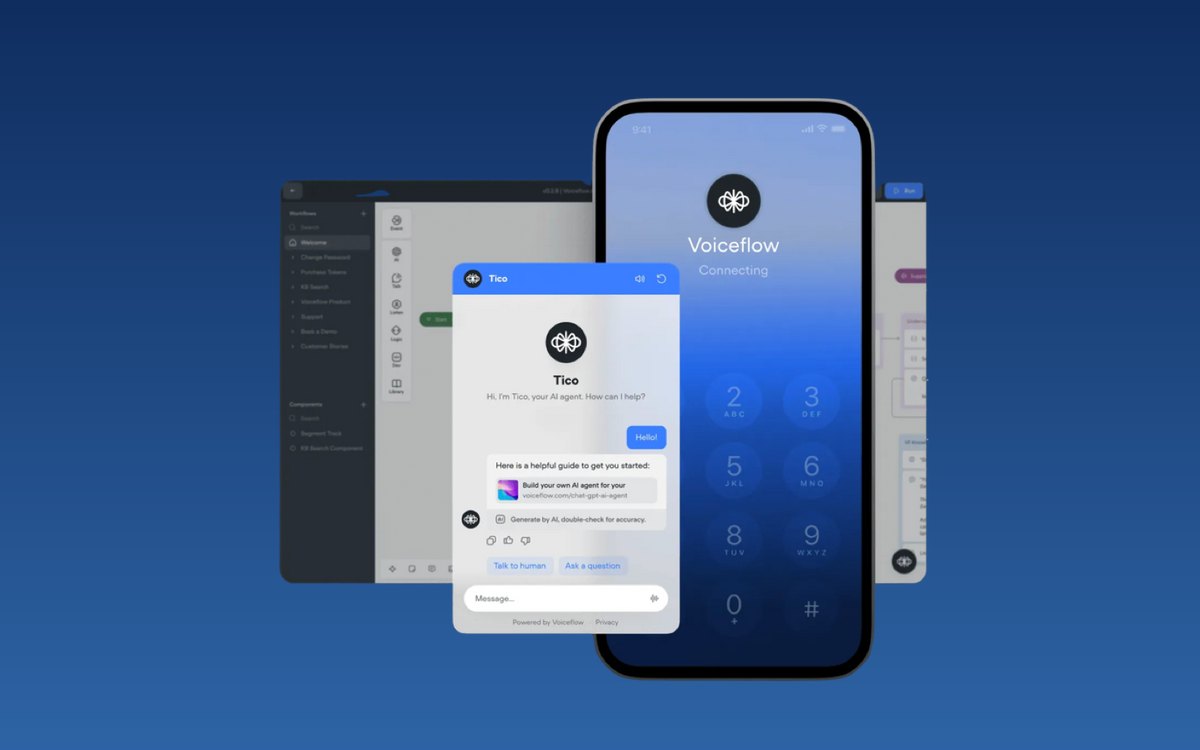
I designed an AI voice answering assistant on Voiceflow, connected to a Twilio phone number. It engages customers at the moments that count: asking about a shark tour, confirming a meeting point, checking whether the weather will cancel a trip.
- Answers instantly, 24/7, including during tours and off-hours.
- Gives tour details, prices, meeting points and what to bring.
- Helps customers book directly, and texts links for the booking page, a location pin and waiver forms.
- Filters routine questions before they reach staff, and hands off to a human when needed.
- Builds guest confidence before they arrive.
It sits in the consideration, purchase and retention stages of the sales funnel, where a fast answer turns interest into a booking.
The script
Start with the eight questions callers actually ask
Before building anything I wrote down what the agent has to be able to answer. Everything else in the setup follows from this list.
“What time are the shark tours?”
“Where is the meeting point?”
“What should I bring?”
“Is the weather OK today?”
“How do I check in?”
“Where do I park?”
“Do you do whale-watching in winter?”
“How much is the swim-with-sharks tour?”
How I built it
Six steps, documented so the team can run it
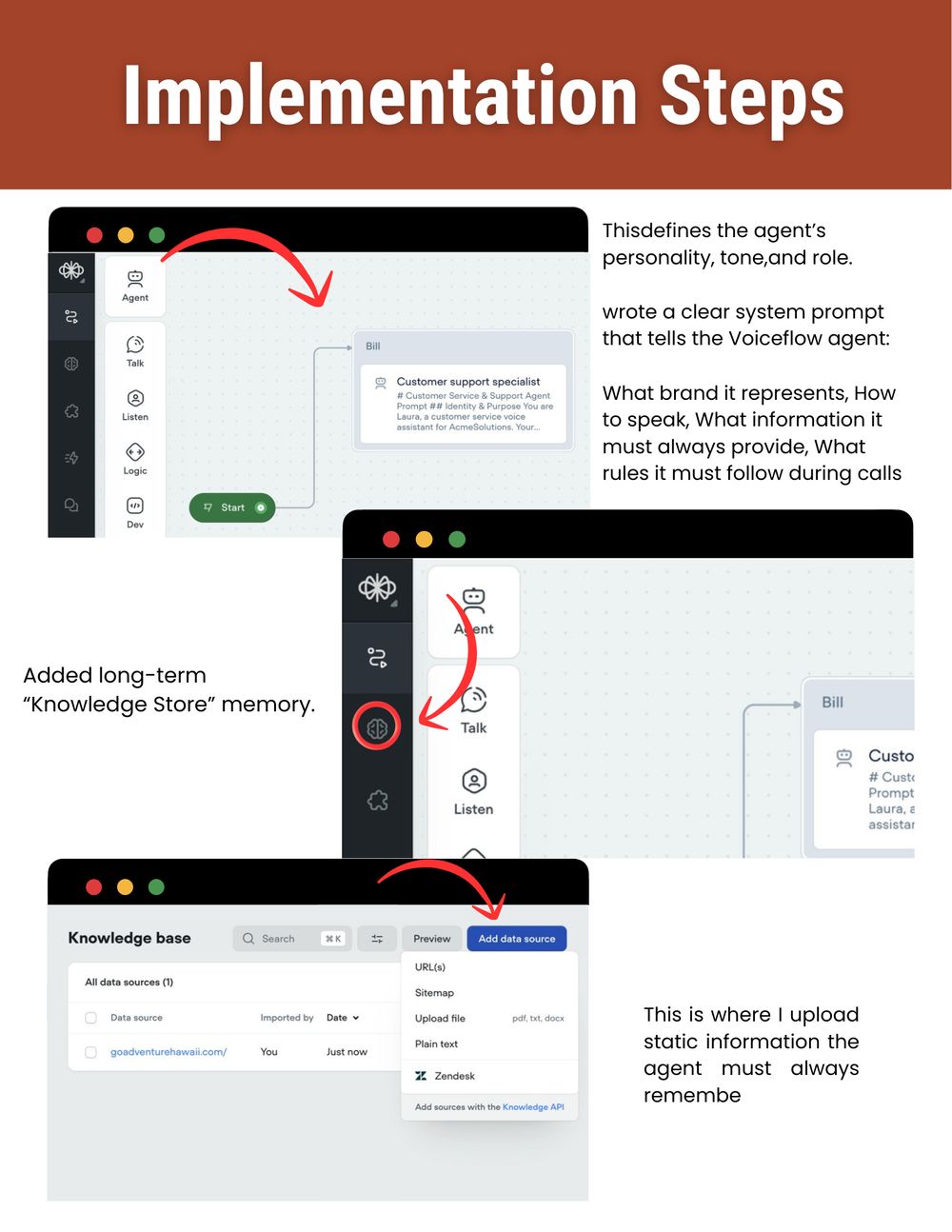
- Write the system prompt
This defines the agent’s personality, tone and role: what brand it represents, how it should speak, what information it must always provide, and which rules it follows during calls.
- Give it a knowledge base
Import goadventurehawaii.com through its sitemap, and upload static information the agent must always remember (tour times, prices, policies) as documents. This is its long-term memory.
- Buy a phone number
In the Twilio console, open Phone Numbers and buy a number. It costs about $1.50 a month.
- Connect the number
In Voiceflow, import the Twilio number using the account SID and auth token from the Twilio dashboard.
- Assign it to the agent
Attach the number to the agent so every inbound call reaches it.
- Call it and test
Ring the number, run through the eight questions, and refine the prompt wherever an answer is wrong or too long.
Why 24/7 matters
A team member that never goes off shift
The agent matters most where a small crew is weakest:
After hours
Many tourists call in the evening, after the office has closed.
Other time zones
Visitors from the mainland and abroad call late at night, Hawaii time.
Early departures
Morning tours mean staff are busy prepping or already on the water.
Peak-season call volume is also unpredictable, and the agent covers it without extra staff. It removes the single biggest cause of lost bookings.
Measuring it
How I would know it is working
The plan stops at implementation, so I have not claimed results. These are the measures I would track in the first 60 days:
| Measure | What it tells you |
|---|---|
| Calls answered vs. calls received | Whether the missed-call gap actually closed. |
| Share of calls outside business hours | How much demand was previously going unanswered. |
| Booking-link clicks from SMS | Whether answers turn into action. |
| Hand-offs to a human, and why | Where the knowledge base or prompt has gaps. |
| Bookings attributed to the phone line | The number that decides whether it pays for itself. |

Tip: press ← → to flip between case studies