A focus group on why visitors see the waterfall and skip the rest of Waimea Valley
I helped run a focus group for Waimea Valley to find out why visitors stop at the waterfall, then built the graphs and findings that turned their answers into three concrete recommendations.
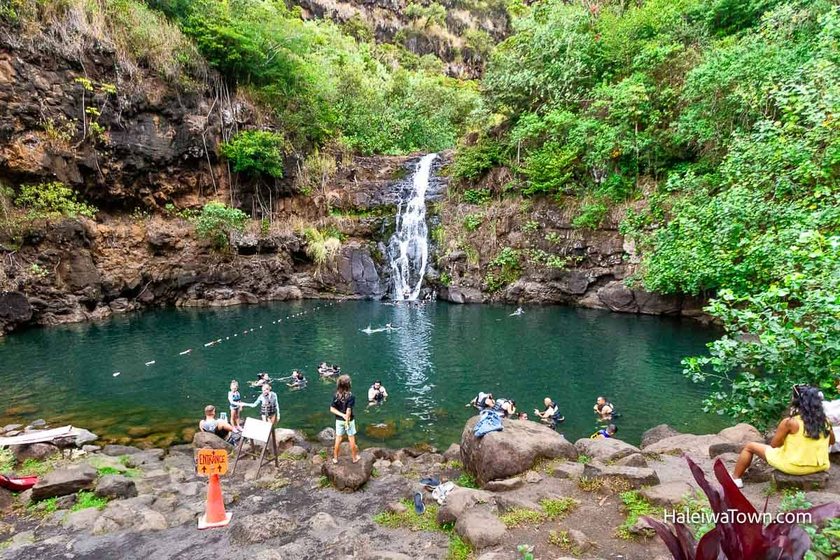
The question
Everyone sees the waterfall. Why does no one see the rest?
Waimea Valley is a large botanical garden and cultural site on Oʻahu’s North Shore, and most visitors head straight for the waterfall. The study set out to understand why visitors focus so heavily on that one attraction and do not engage with the rest of the valley.
The goal was to uncover visitors’ motivations, perceptions and barriers, and to recommend strategies that encourage them to explore everything the valley offers.
How we ran it
A small, focused group of the right people
We recruited international visitors aged 18 to 26 and members of the military community, all of whom had visited at least once. The session was held at BYU–Hawaii’s Science Building, with confidentiality waivers signed beforehand and a script of 20 prepared questions.
Who did what
- Me: group facilitator, and graphs and findings.
- Teammates covered transcription and word analysis; research methods and video; and the written report, setup and photography.
A note on scale: this is a small qualitative study. It is meant to surface themes and language to test further, not to give statistically representative percentages.
What we heard
Visitors wanted more to do, and more help finding it
The central message from participants was that once they had seen the falls, there was little else to hold their attention.
After seeing the falls, there wasn’t much else to do.
A focus group participant
Does the valley need more activities beyond the waterfall?
What appealed most as additions
Popular suggestions: cultural demonstrations, small adventure features like a rope swing, and family-friendly activities such as scavenger hunts.
Improvement priorities, ranked
Percentages are as reported in the research deck.
Reading across the findings
Part of this is a communication problem
The two highest-ranked priorities tie together. Visitors asked for more activities and for better visibility and signage, both at 80%. That suggests the valley may offer more than visitors realize, and that they are not told what is there or when it happens. If that is right, the fix is as much about showing and scheduling as it is about building.
This section is my interpretation of the data, not a finding the participants stated.
Recommendations
Three changes, each tied to what we heard
1. Photo spots across the valley
Add scenic photo booths or themed picture spots in different sections, to encourage exploration, memory-making and social sharing. Answers the 67% who wanted photo and memory experiences.
2. Seasonal activities
Create games, scavenger hunts and children’s programs that make exploring fun for families, plus seasonal events such as holiday themes to bring people back. Answers the 63% who wanted games and activities.
3. A consistent show schedule
Offer regular, published times for cultural performances and demonstrations so guests know when and where to go. Answers the 80% who asked for better visibility.
The findings and recommendations were delivered as a 13-slide report.
Tip: press ← → to flip between case studies